
NIGERIA
40 Acre Trust
Jobs, power and skills for Nigeria. Our ten-year plan starts with a cashew processing factory and its own natural gas power plant.
Jobs, power and skills for Nigeria. Our ten-year plan starts with a cashew processing factory and its own natural gas power plant.
Phase One goals from the 40 Acre Trust Nigeria ten-year plan. These are targets, not current operations.
Nigeria grows a large cashew crop, but almost all of it leaves the country unprocessed. The jobs and most of the value go with it.
Raw cashew nuts Nigeria exported in 2025, earning a little over $400 million. Most went to Vietnam, with India second.
As of February 2026, more than 70% of Nigeria's cashew processing plants had closed. The causes were energy costs and expensive finance, not a shortage of nuts.
The United States grows no commercial cashews and imports all it eats, mostly from Vietnam. A Nigerian source linked to a U.S. buyer adds a new supply line.
The plan is built in phases so each step is done right. Each phase is planned as its own project with its own financing, and no phase's assets will secure another phase's debt.
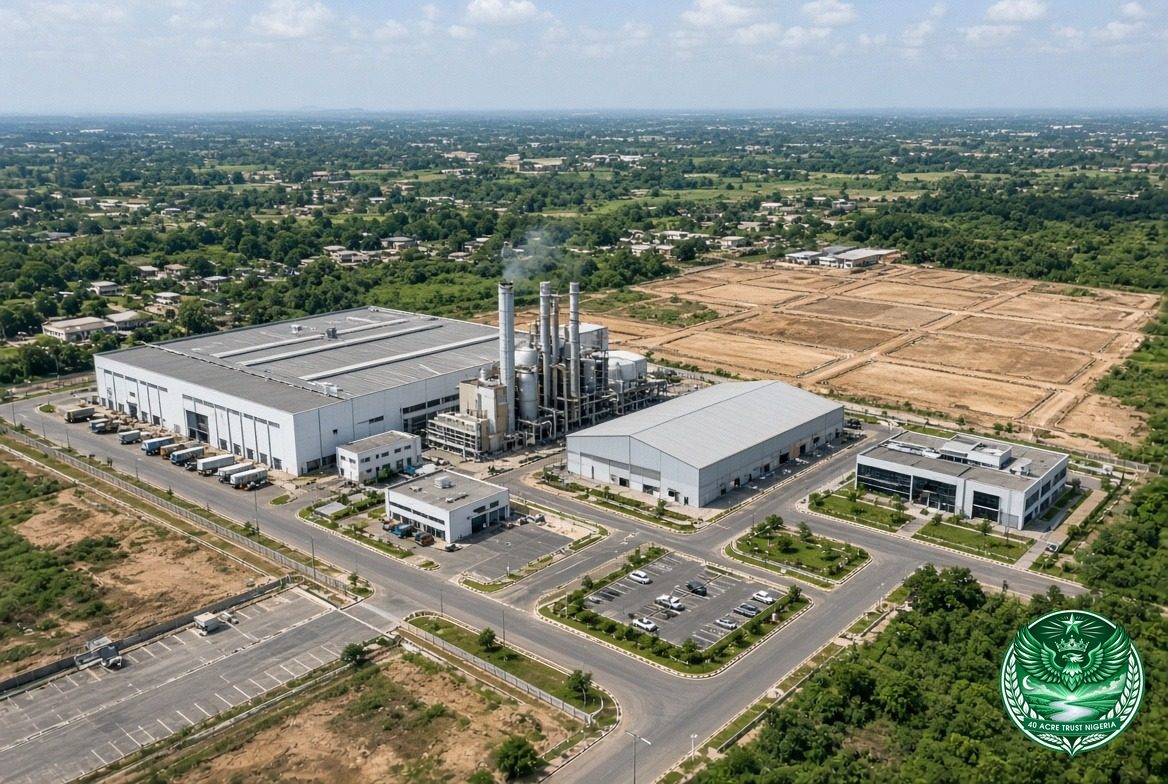
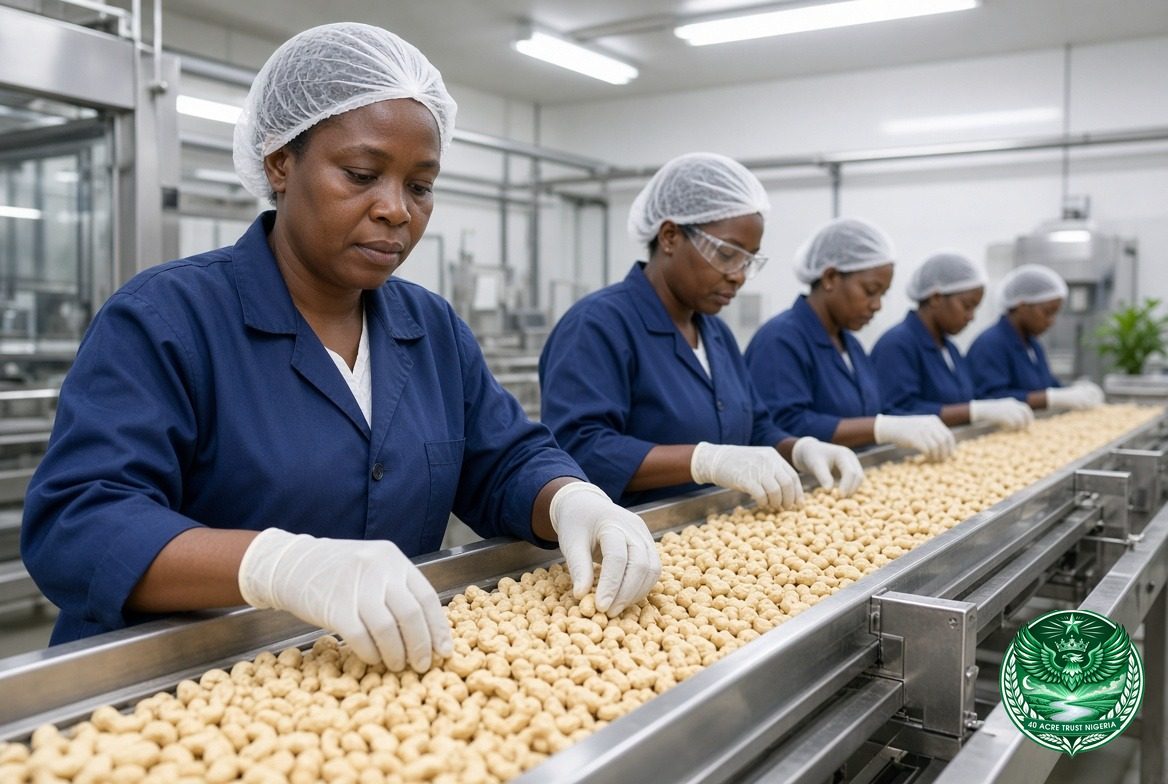
A cashew processing and finished-goods factory, formed as a joint venture with a Nigerian-owned processor, with its own 6 MW gas power plant and an on-site skills centre.
A workforce housing community near the factory. Power grows to about 9 MW and a technical institute opens.
A hospital and clinics for workers, families and the community. Power grows to about 12 MW, with allied-health training.
Phases Two and Three are sized for planning only. Each will get its own detailed plan and financing application once Phase One is running.
The goal is a factory that turns the whole cashew into finished goods in Nigeria, then sells branded Nigerian products in the United States through a 40 Acre Trust company. It is the same U.S.-Africa supply model 40 Acre Trust is pursuing in The Gambia.
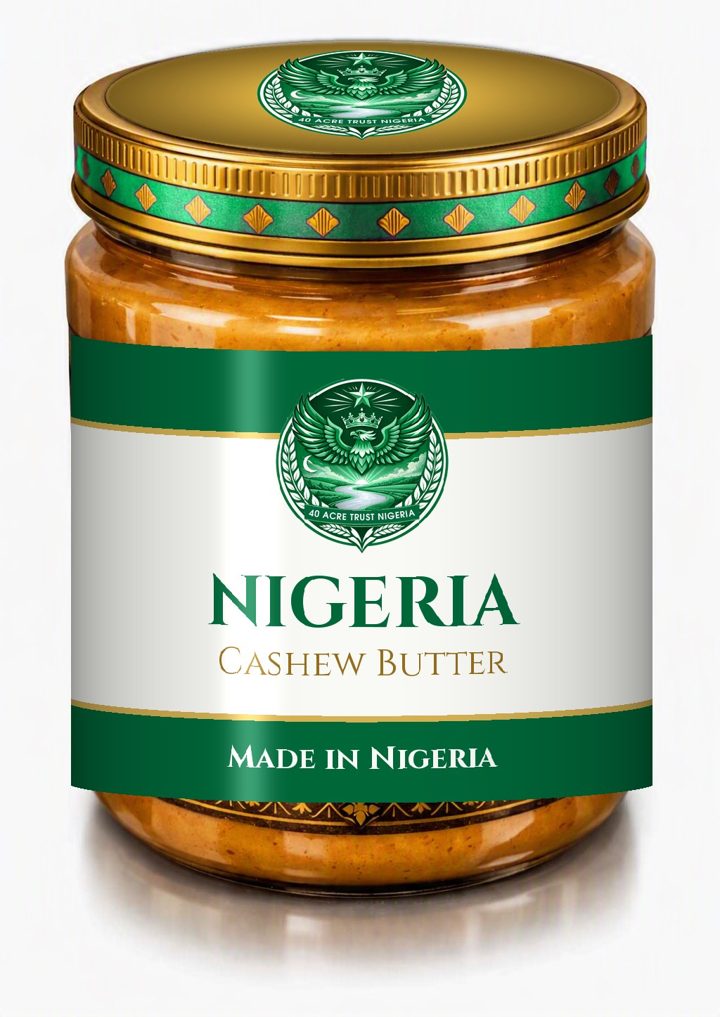
Made from broken kernels, for health-food, bakery and plant-based brands.
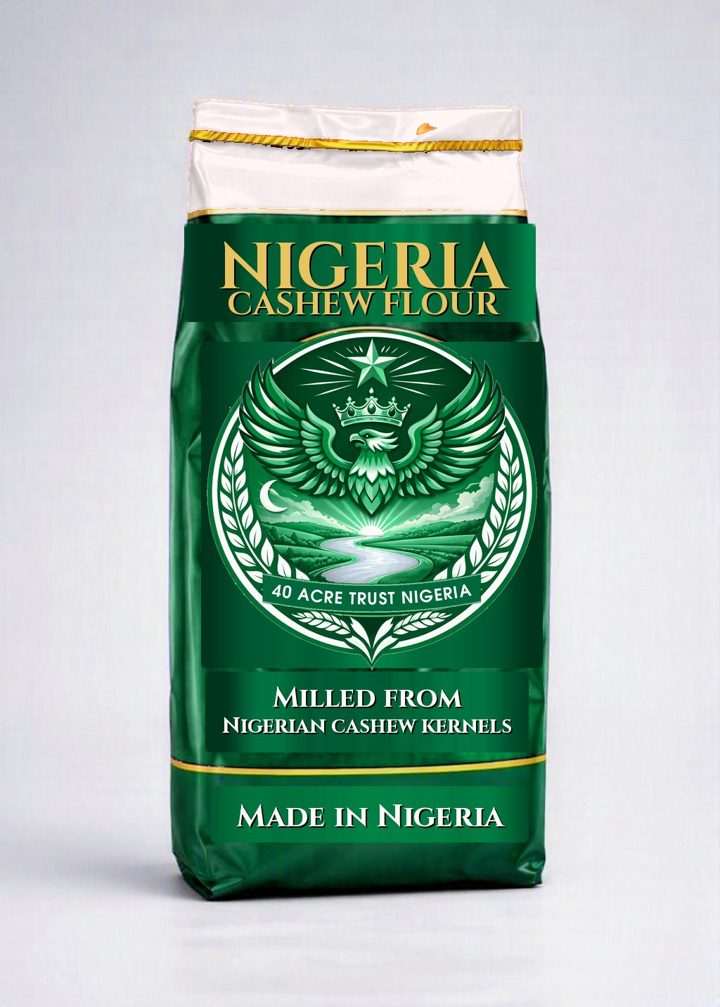
Milled from broken kernels, for health-food, bakery and plant-based brands.
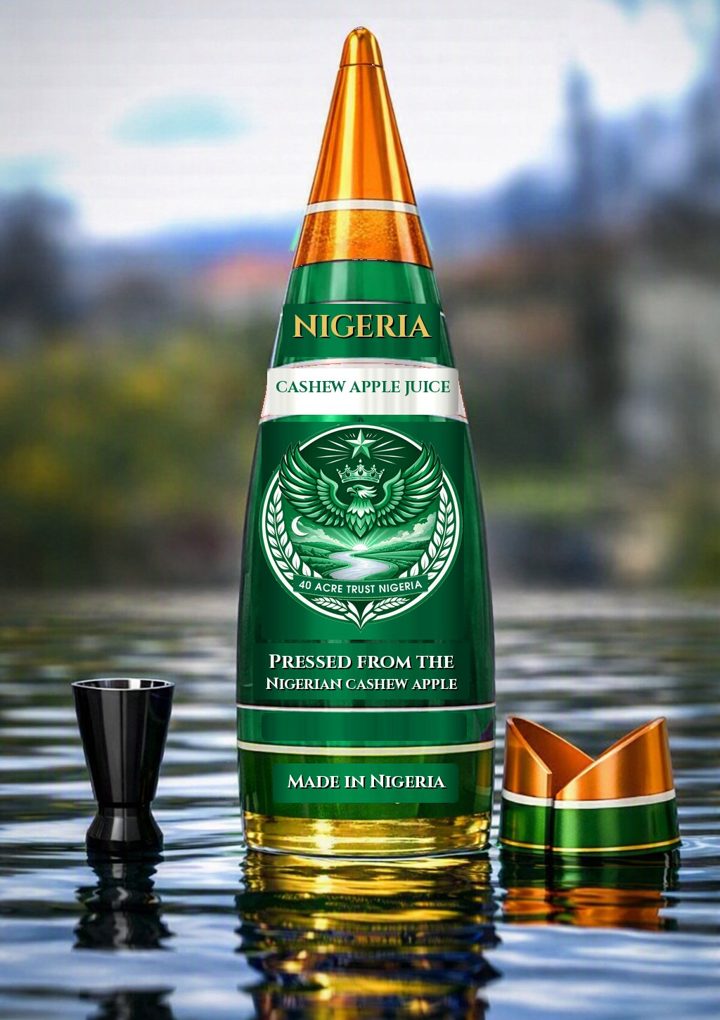
Today cashew apples rot in the field while Nigerian juice makers run on imported concentrate. Cashew apple juice can replace some of it.
Packaging shown is a design concept adapted from the 40 Acre Trust Gambia product line. These products are planned and are not yet in production.
Unreliable, expensive power closed most of Nigeria's cashew plants. This factory is planned with its own natural gas power plant, built with the factory and owned by the project.
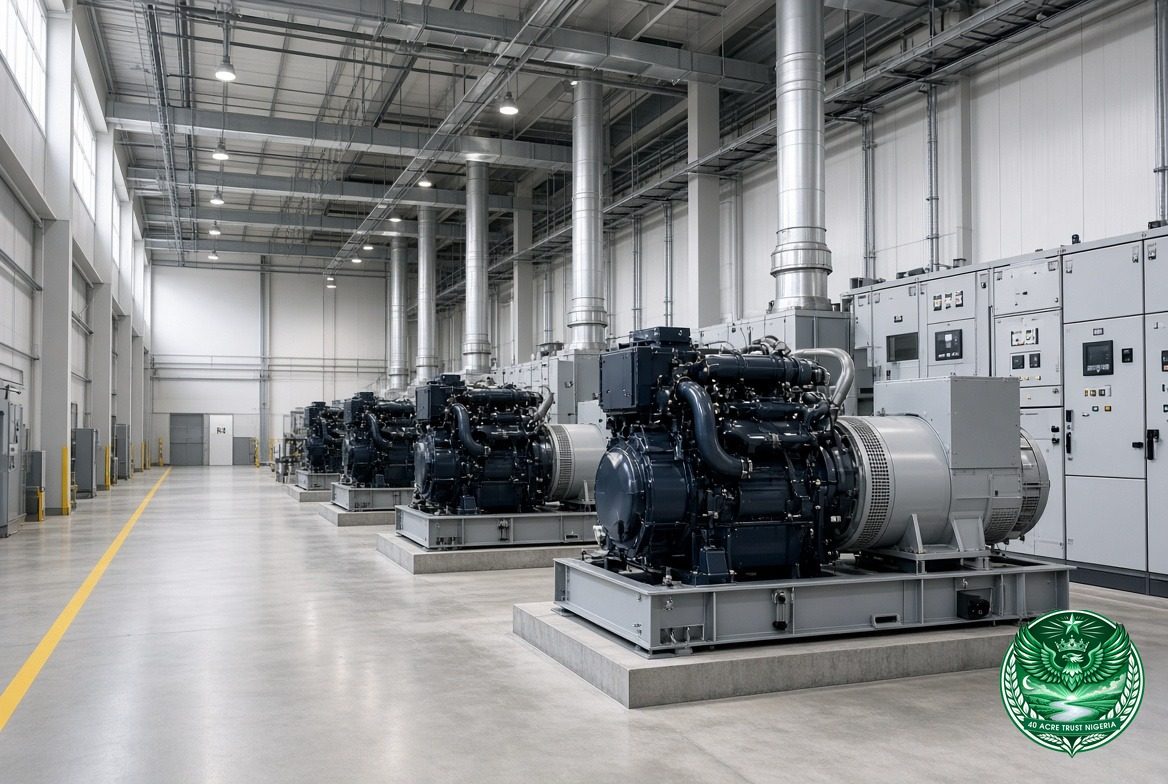
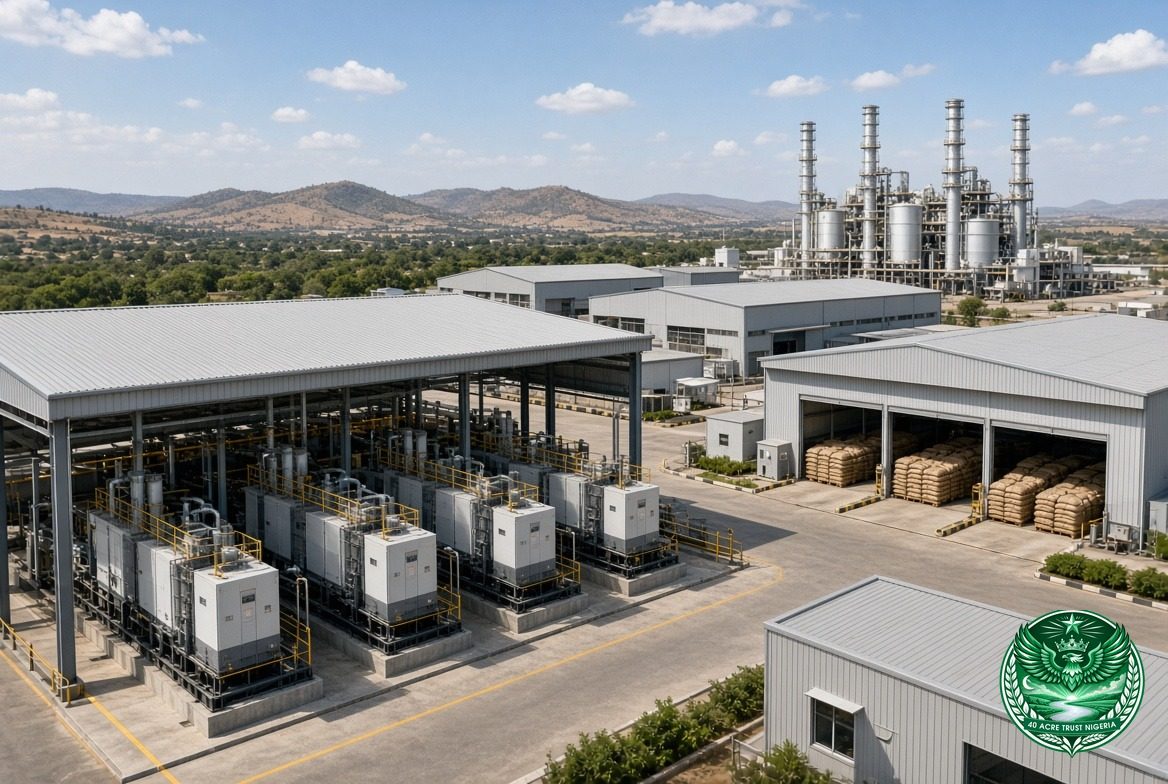
The goal is to buy everything that can be bought in the United States. By value, about 70% of Phase One equipment and construction is planned to be U.S.-sourced: the gas power plant, switchgear, controls, gas equipment, the lab, and the kernel grading, sorting, roasting and packaging lines.
The one exception: no U.S. company makes cashew shelling, peeling or shell-oil machinery. That equipment is built in India, Vietnam and China.
The goal is a power plant and factory run entirely by Nigerians. U.S. experts build it, run it at first, and train Nigerian crews to take over. Each expert trains two to three Nigerian understudies.

On-site at the factory, with classrooms, engine and electrical labs and a control-room simulator. Planned to train about 35 power plant operators and technicians, plus maintenance and food-safety staff.
Power generation, electrical, gas, construction trades and food processing, for the crews who build and run Phase Two.
Nurses, technicians and hospital support staff for the Phase Three hospital.
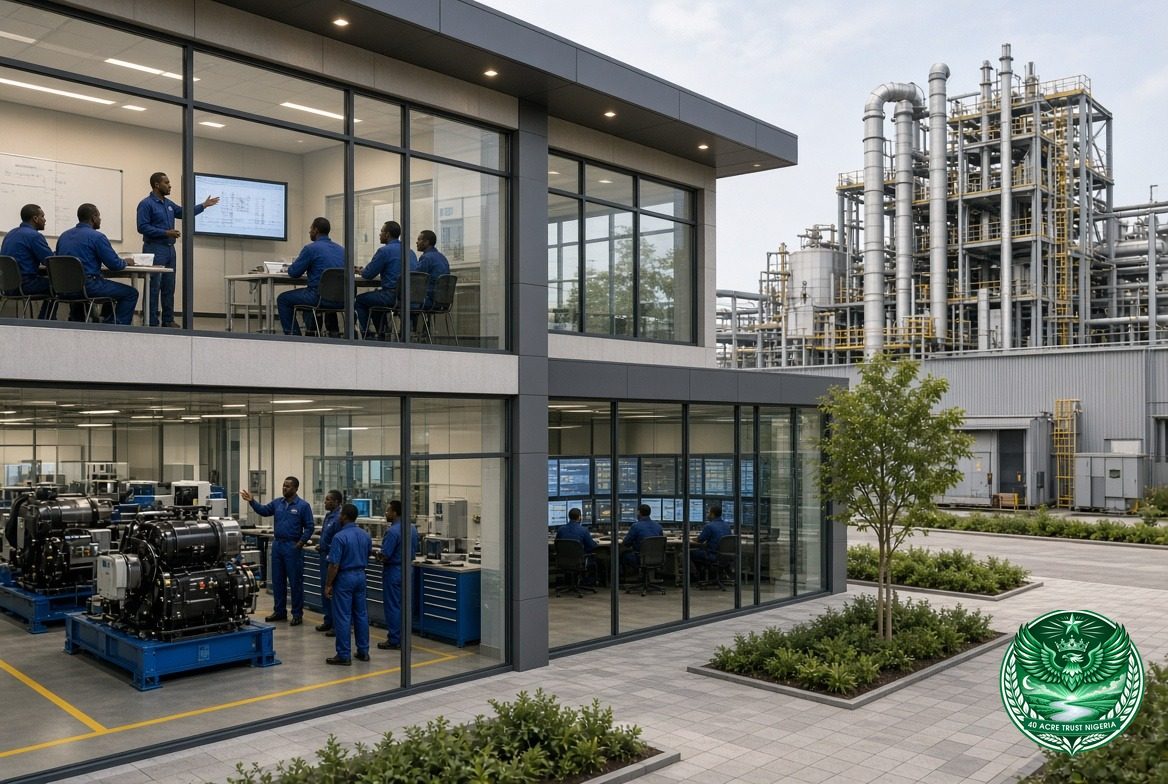
About 3,417 direct jobs planned in Phase One. More than 70% of workers in Nigerian cashew processing are women.
The plan is to buy raw nuts direct from farmer cooperatives, from an estimated 20,000 or more smallholder farm households.
Every tonne processed in Nigeria earns export dollars, instead of shipping the value overseas as raw nuts.
A power plant that grows with each phase, from the factory to housing to the hospital.
A training school that grows from an on-site skills centre into a technical institute and allied-health training.
Later phases plan workforce housing and a hospital with clinics for workers, families and the community.
Confirm Nigeria leadership, meet the National Cashew Association of Nigeria, and visit processing plants to choose a Nigerian-owned joint-venture partner.
Present a concept note to the Nigerian Investment Promotion Commission and the state governor on land on the gas network, gas supply and work permits.
Hold a pre-application meeting with the U.S. International Development Finance Corporation (DFC), and approach U.S. EXIM and USTDA.
Engage a U.S. engineering firm to design the power plant, set up the NAPTIN training partnership, and open recruiting for the U.S. expert team.
Sign the first cooperative supply agreements before the February harvest.
Complete the feasibility study and full financing application, with the goal of starting construction in Year 1.

Founder, CEO and Trustee of 40 Acre Trust ELITE in Valdosta, Georgia, the U.S. sponsor of 40 Acre Trust Nigeria.

Responsible for putting together the people: the in-country team, the Nigerian partners, the trainee cohorts, and the U.S. experts who will train them.
For partnership inquiries or to learn more about the work in Nigeria, email us.
blessing@nigeria.40acretrust.xyz